
Sleep and Anxiety: Understanding the Two‑Way Connection
May is Mental Health Awareness Month! Project Sleep believes that mental health and sleep health are closely intertwined. We are excited to share interesting connections between sleep and mental health.
 What is the connection between sleep and anxiety?
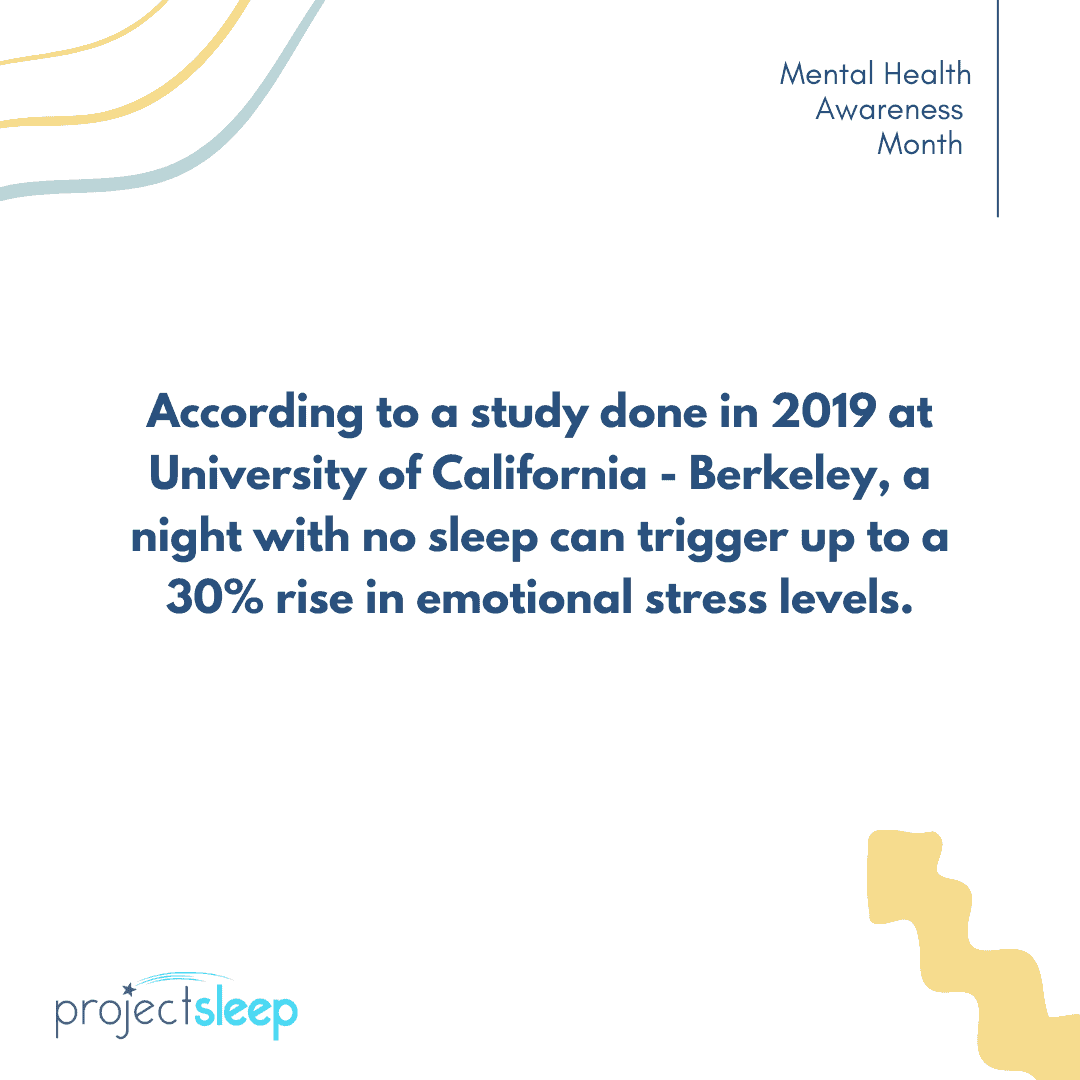
Sleep and anxiety have a powerful two‑way relationship. According to a study done in 2019 at University of California – Berkeley, a night with no sleep can trigger up to a 30 percent rise in emotional stress levels.
When anxiety makes it hard to fall or stay asleep, poor sleep can heighten anxiety the next day. Over time, this creates a negative cycle that can feel difficult to break.
The good news? This cycle doesn’t have to last forever. Thanks to evidence-based methods, both anxiety and sleep can be managed. This post explores how sleep affects anxiety, how anxiety affects sleep, and what you can do to interrupt the cycle.
How Poor Sleep Increases Anxiety
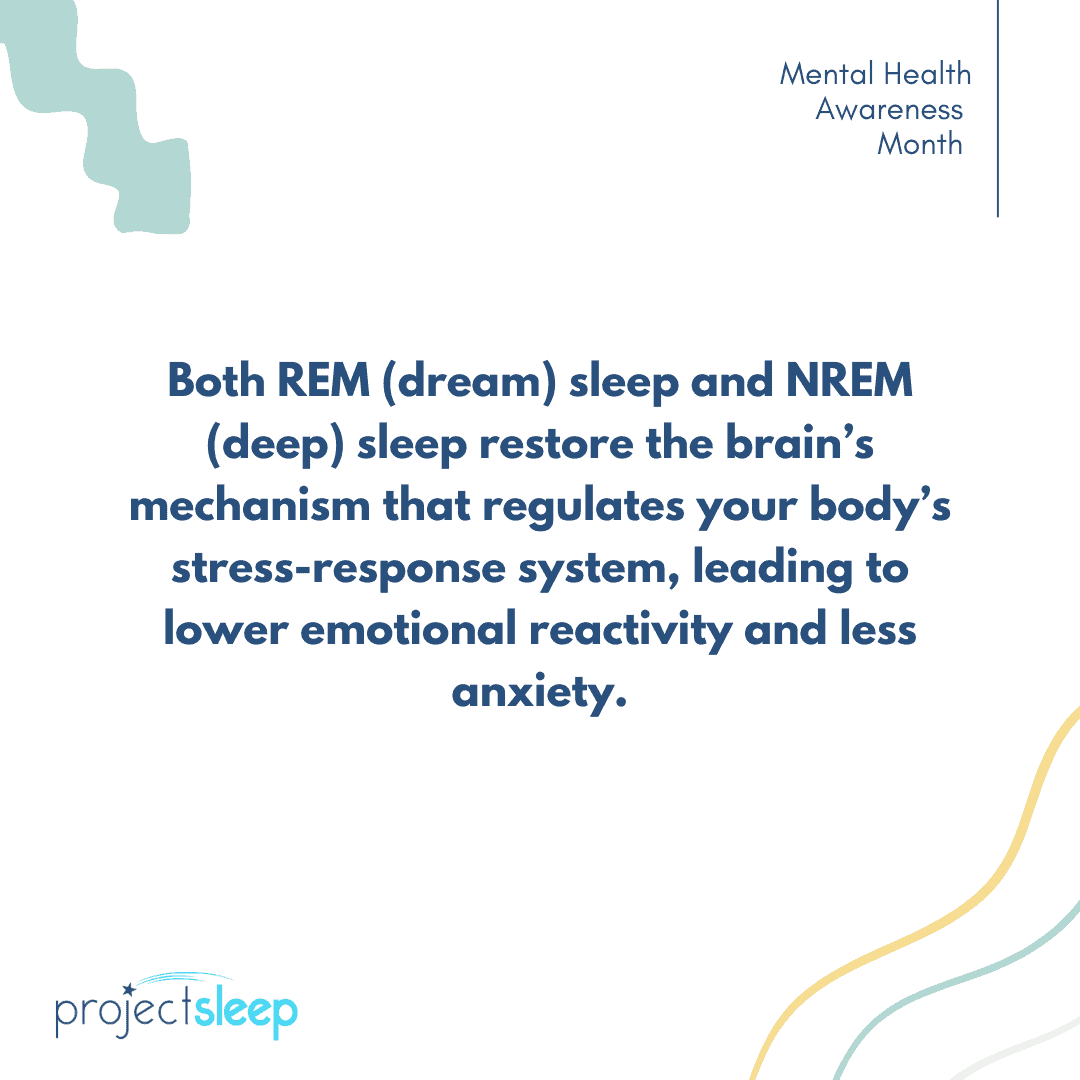
During sleep, your brain regulates your body’s stress response system. New studies show that deep sleep (NREM slow wave sleep) restores the brain’s mechanism that regulates our emotions, leading to lower emotional reactivity and less anxiety (Nature Human Behavior). Dream sleep (REM sleep) is also believed to be critical for emotional processing and regulation, as it takes new memories and puts them in context from a wider point of view.
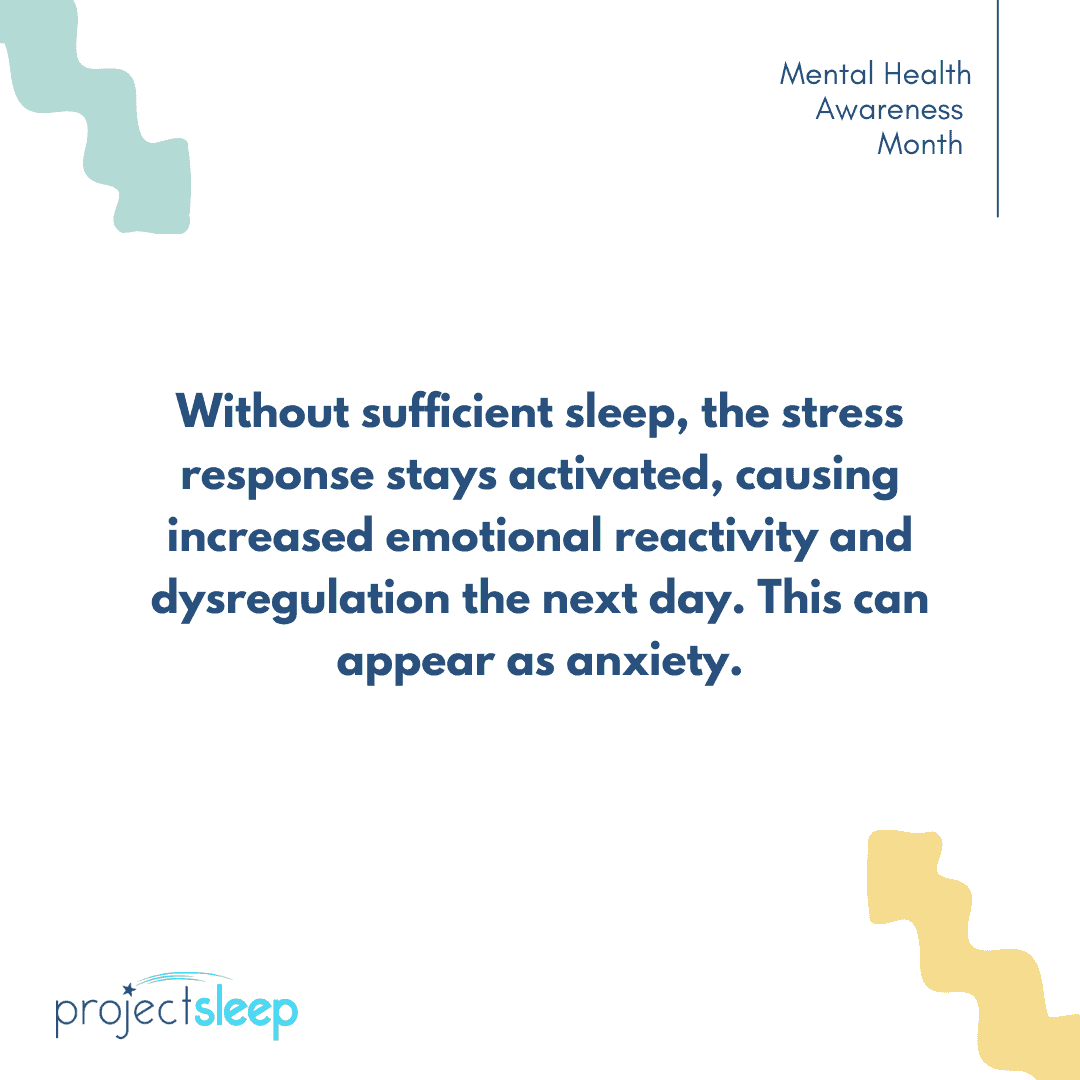
Without sufficient sleep, the stress response stays activated, which causes increased emotional reactivity and dysregulation the next day (Nature Human Behavior). This can appear as anxiety, an emotion characterized by apprehension and bodily tension (tense muscles, faster breathing, more rapid heart beat) in which a person anticipates impending danger or misfortune.
People with existing traits of anxiety are especially vulnerable to poor sleep’s effects, like a heightened anticipatory response (Journal of Neuroscience). On the flip side, treating underlying sleep problems can be paramount to treating anxiety disorders.
We try to treat [depression/anxiety and insomnia] as two different issues. The problem is a lot of people have this assumption that if you treat the depression or the anxiety, that the other sleep issues will get better. But the reality is, the sleep issues don’t get better.”
– Dr. Shelby Harris via Sleep In 2021 Interview
A Self-Fulfilling Prophecy: How Anxiety Disrupts Sleep
The thing about not getting enough sleep and experiencing poor sleep’s effects, like the heightened anticipatory response, is that it can lead to more anxiety about your ability to fall and stay asleep. Worrying about whether or not you will sleep is often a self-fulfilling prophecy.
When you’re anxious about falling asleep, your body is alert and stressed and your thoughts may be racing, making it more difficult to fall and stay asleep. The more worry you accumulate around falling asleep, the more it becomes a habit—an anticipated bedtime anxiety that ends up reinforcing your negative thoughts about going to bed. Reduced sleep can then increase overall anxiety during the day.
This is the negative cycle of sleep and anxiety. The important thing to remember is that the cycle can be interrupted with the right strategies.
Managing Nighttime Anxiety
Accepting that you can’t control every aspect of your sleep can be a critical first step in overcoming sleep difficulties. After that, there are a few tricks and treatment options that can help anxious sleepers.
Cognitive behavioral therapy (CBT) is an evidence-based form of talk therapy focused on reorienting negative thinking and commonly used to treat anxiety disorders. CBT can be tailored to different types of anxiety, such as social anxiety, OCD, and panic disorder. CBT can also be tailored to treat sleep disorders, such as CBT-I for insomnia.
CBT-I may be ideal for someone who has anxiety and sleep issues and wants to work on their insomnia, as it goes beyond basic sleep hygiene and tailors sleep/wake schedules to the patient, as well as addressing worries about sleep, quieting the brain and body and targeting sleep-incompatible behaviors.
You can often do CBT-I along with other treatments for anxiety, but sometimes people find that working solely on their insomnia first is useful to help quiet the anxiety even without targeting daytime anxiety directly.”
– Dr. Shelby Harris
Improve sleep hygiene by building healthy sleep habits and checking your sleep environment. Dim the lights at night, eliminate alcohol and screen time before bed, keep your room cool, and if you still can’t fall asleep, get out of bed and return once you feel drowsy. Sleep hygiene can help with the occasional bad night here and there, though sleep disorders such as insomnia will likely require a more comprehensive approach.
Relaxation techniques such as deep breathing, progressive muscle relaxation, and scheduling daily worry time can all help put your mind at ease when you lay down to sleep.
Meditation during the day can help with recognizing and putting aside noisy thoughts at night. Dr. Shelby Harris explains that “practicing during the day makes you more mindful at night and better able to let go – when people only meditate to fall asleep, they’re missing the point of what meditation can be useful for with anxiety and insomnia.” Using meditation to fall asleep can be helpful at times, but at other times it can actually be more energizing.
In Summary: Sleep and Anxiety
Addressing sleep issues is an important step in improving overall mental health. If you have difficulty sleeping and find sleep-related anxiety has you caught in a negative loop, there are ways to break the cycle! Sometimes a simple bedtime routine may do the trick, while other times professional help such as CBT-I may be useful. If you are still struggling with sleep or anxiety around sleep, consider seeing a sleep specialist who can help diagnose a potential underlying sleep disorder.
Written by Anna Marr
It’s normal for people to feel tired or overwhelmed sometimes. If mood changes and feelings of anxiety or unhappiness are severe, or if they last longer than 2 weeks, please consider seeking a medical professional.
If you or a loved one are struggling with anxiety or panic disorder, contact the Substance Abuse and Mental Health Services Administration (SAMHSA) National Helpline at 1-800-662-4357 for information on support and treatment facilities in your area. The National Alliance on Mental Illness (NAMI) also provides a free, confidential helpline available Monday Through Friday, 10:00 a.m. – 10:00 p.m. ET at 1-800-950-6264.
Social Media Shareables
More on Sleep and Mental Health

Sleep and Mood: How Sleep Supports Mental Well‑Being

Sleep and Anxiety: Understanding the Two‑Way Connection

Sleepiness, Fatigue, or Depression? How to Tell the Difference
The post Sleep and Anxiety: Understanding the Two‑Way Connection appeared first on Project Sleep.
Läs hela artikeln: Visa original